
.svg)
Branding
Branding Strategy
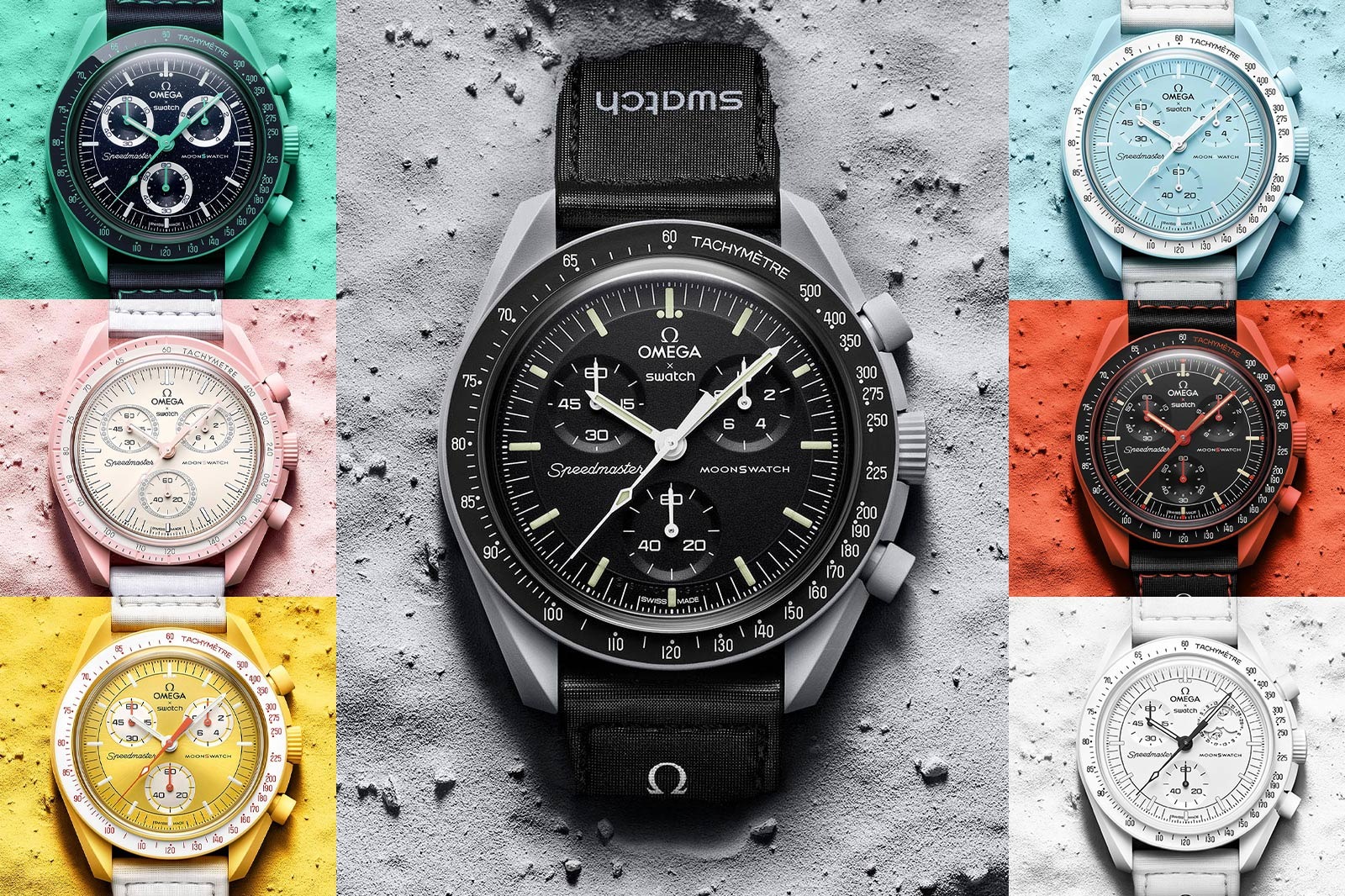
A few years ago, Omega did something watch collectors absolutely hated. They teamed up with Swatch.
If you're not deep in the watch world, here's the quick version: Omega makes the Speedmaster "Moonwatch" — one of the most iconic luxury timepieces ever made. We're talking $8,000+ starting price. Swatch? They make the colorful plastic watches your cool cousin was rocking in the '90s.
So when they dropped a $260 "MoonSwatch" inspired by the Speedmaster, the internet lost it.
"Ruined the brand."
"Cheapened the legacy."
"Luxury is dead."
And then? People lined up around the block to buy one anyway. Stores got mobbed. Secondary market prices exploded. They sold over a million units — and Omega Speedmaster sales reportedly went up around 50% after the collab.
Turns out, people just wanted to participate.
Why Aspiration Scales (And Why That's Your Brand Strategy Lesson)
Most people can't afford an $8,000 watch. But they can afford to feel like they're part of that world for $260.
That's the whole game. The MoonSwatch didn't dilute Omega — it expanded the brand's cultural footprint. It let regular people buy into a luxury identity, which actually made more people want the real thing.
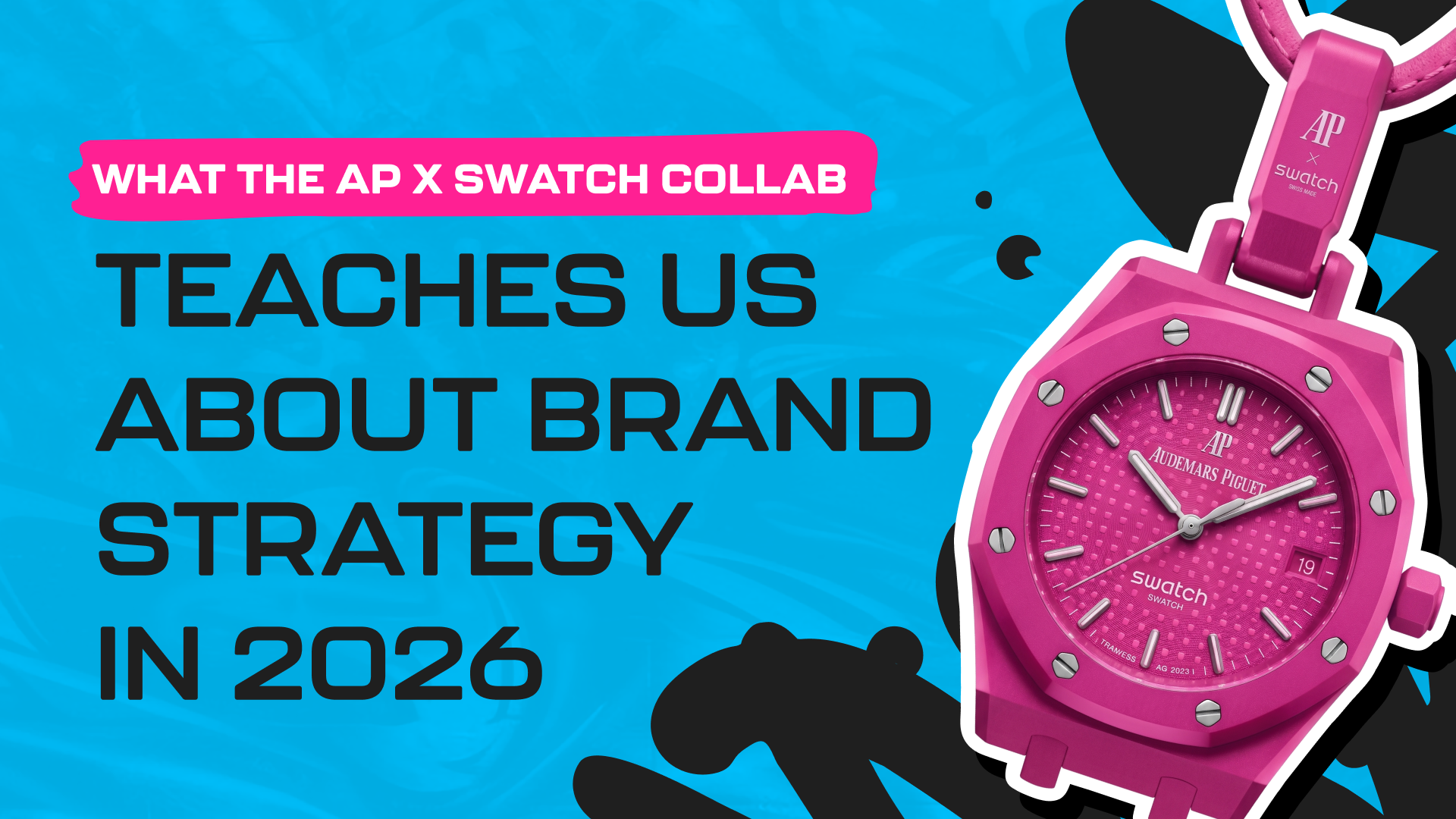
And now? The same playbook is happening again with the upcoming Swatch x Audemars Piguet collab.
If you don't know AP, here's what you need to know: they make the Royal Oak — one of the most famous luxury watches on earth. Most start around $30,000. Many are over a million. And good luck actually getting one, which is exactly why they're even pricier on the secondary market.
Here's the kicker: Swatch and AP have only teased the collab. Nobody actually knows what it's going to look like yet.
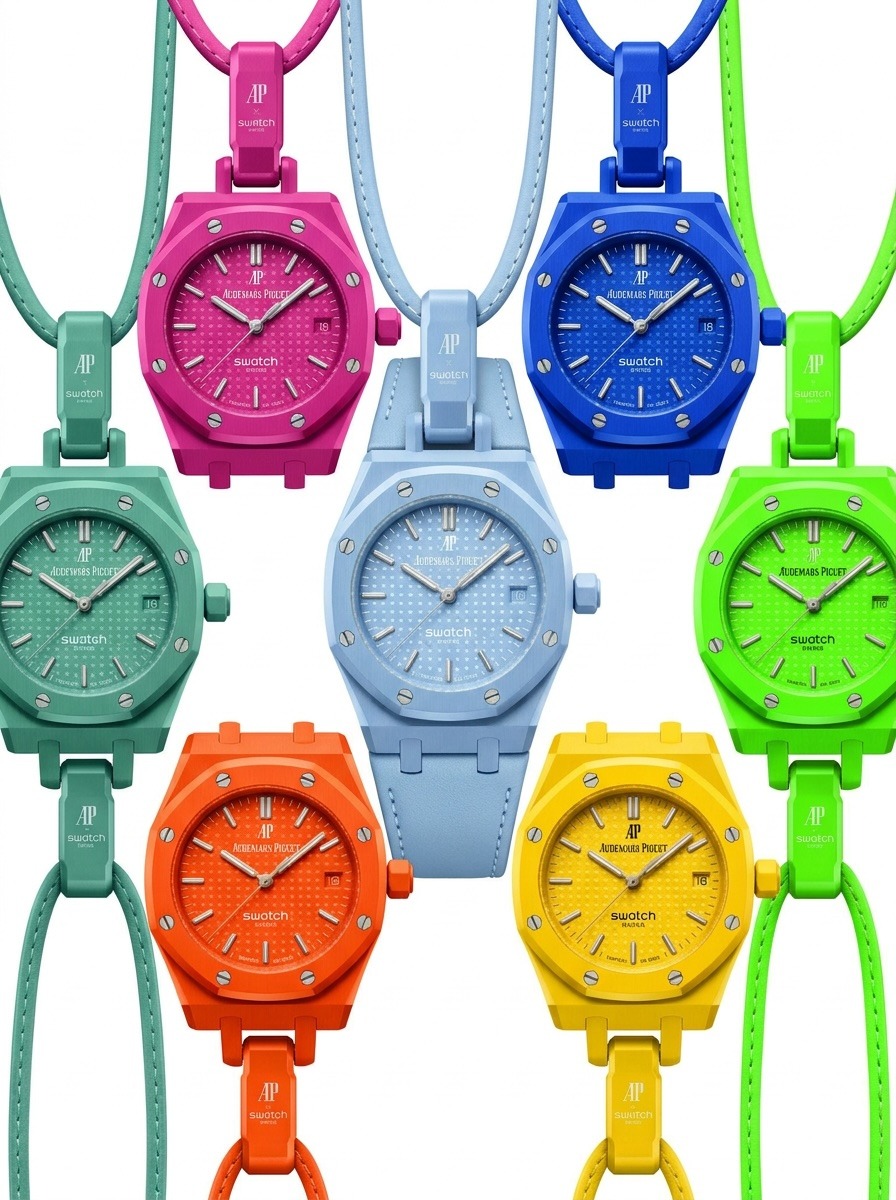
If you're seeing mockups online? Most of those are AI-generated fan concepts. The teaser says "Royal Pop," which some watch folks think might reference old Swatch Pop watches that could be popped out of the strap and worn in different configurations. So this thing might not even be a normal watch. Could be some weird modular accessory. Which honestly makes the whole thing even smarter from a brand strategy standpoint.
High-Low Collabs Are Everywhere — And There's a Reason for That
This isn't just a watch thing. High-low brand collaborations are one of the most effective brand and performance marketing moves in the playbook right now.
Louis Vuitton x Supreme. Dior x Air Jordan. Target x Missoni. Designer brands partnering with fast food chains. The pattern is everywhere because it works.
Here's why it works:
It transfers credibility. When a prestige brand shakes hands with a mass-market brand, both parties borrow cultural equity from each other. The luxury brand gets virality and access to new audiences. The everyday brand gets a halo of aspiration.
It creates conversation. A good collab makes people feel like they're witnessing a moment, not being marketed to. That's the difference between content that gets shared and content that gets scrolled past.
It generates organic reach in an era where organic reach is basically extinct. Culture moves faster than advertising now. A well-executed collab can do more for brand awareness in a week than a six-month media buy.
This is exactly the kind of bold, unconventional thinking that separates brands that grow from brands that just exist.
What This Means for Your Brand (Yes, Even If You're Not Selling Watches)
Most companies are still playing the old game. They're asking: "How do we get more clicks?"
The smarter brands are asking: "How do we become culturally interesting enough that people actually want to talk about us?"
Huge difference. Whether you're a growth-stage startup trying to break through the noise or a mid-market company looking to reach new audiences, the principle is the same: attention is harder to earn than ever, and the brands winning are the ones borrowing it strategically.
That means:
Thinking about partnerships differently. Who has an audience you want access to? What can you offer them? Collabs don't have to be between billion-dollar brands. A smart partnership between two complementary businesses can generate real buzz.
Creating moments, not just content. Your audience doesn't want to be marketed to — they want to feel like they're in on something. Your brand strategy should be building a world people want to participate in.
Playing the long game on brand. The MoonSwatch didn't just sell watches. It created Omega fans who didn't know they were Omega fans yet. Great branding is always planting seeds for future revenue.
The Real Currency in 2026? Cultural Relevance.
Here's the honest truth: in 2026, attention is currency. And the brands that are winning aren't necessarily the ones with the biggest budgets — they're the ones with the best ideas.
Not clicks. Not impressions. Cultural relevance.
The AP x Swatch drop (whatever it ends up being) will dominate feeds, generate think-pieces, and push more people to Google "Audemars Piguet" than any display ad campaign ever could. That's the power of a bold, well-executed brand moment.
And if you're sitting there thinking "that's cool, but what does it have to do with my business?" — that's exactly the conversation we love having at NickelBronx.
We exist to help brands be bold. To find the unconventional moves that actually move the needle. Because playing it safe is the riskiest thing you can do right now.
Want to talk about what bold brand strategy looks like for your business? Let's connect.

.png)
.svg)
.svg)
.svg)
.svg)
.svg)
.svg)
.svg)
.svg)
.svg)
.svg)
.svg)
.svg)
